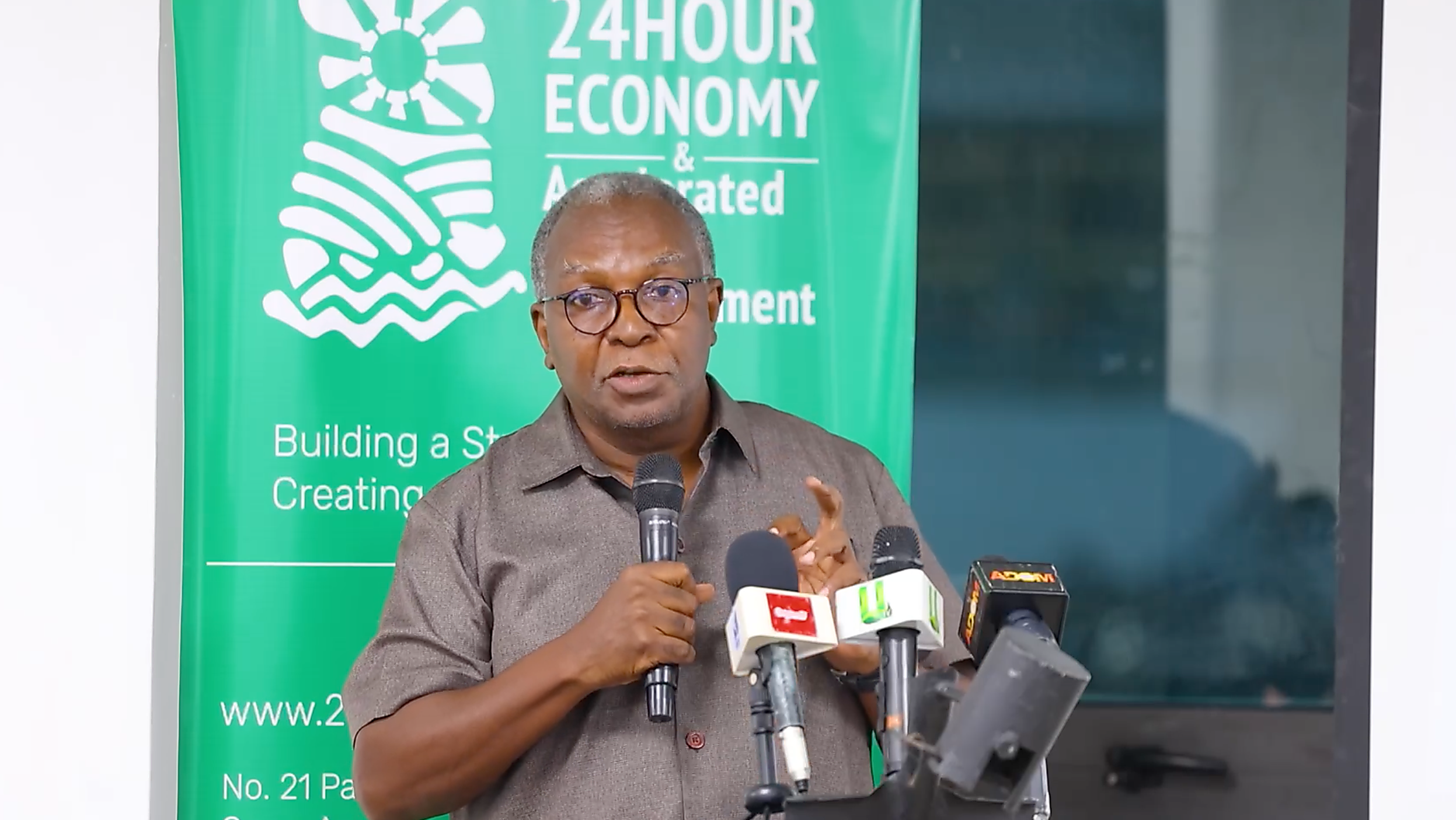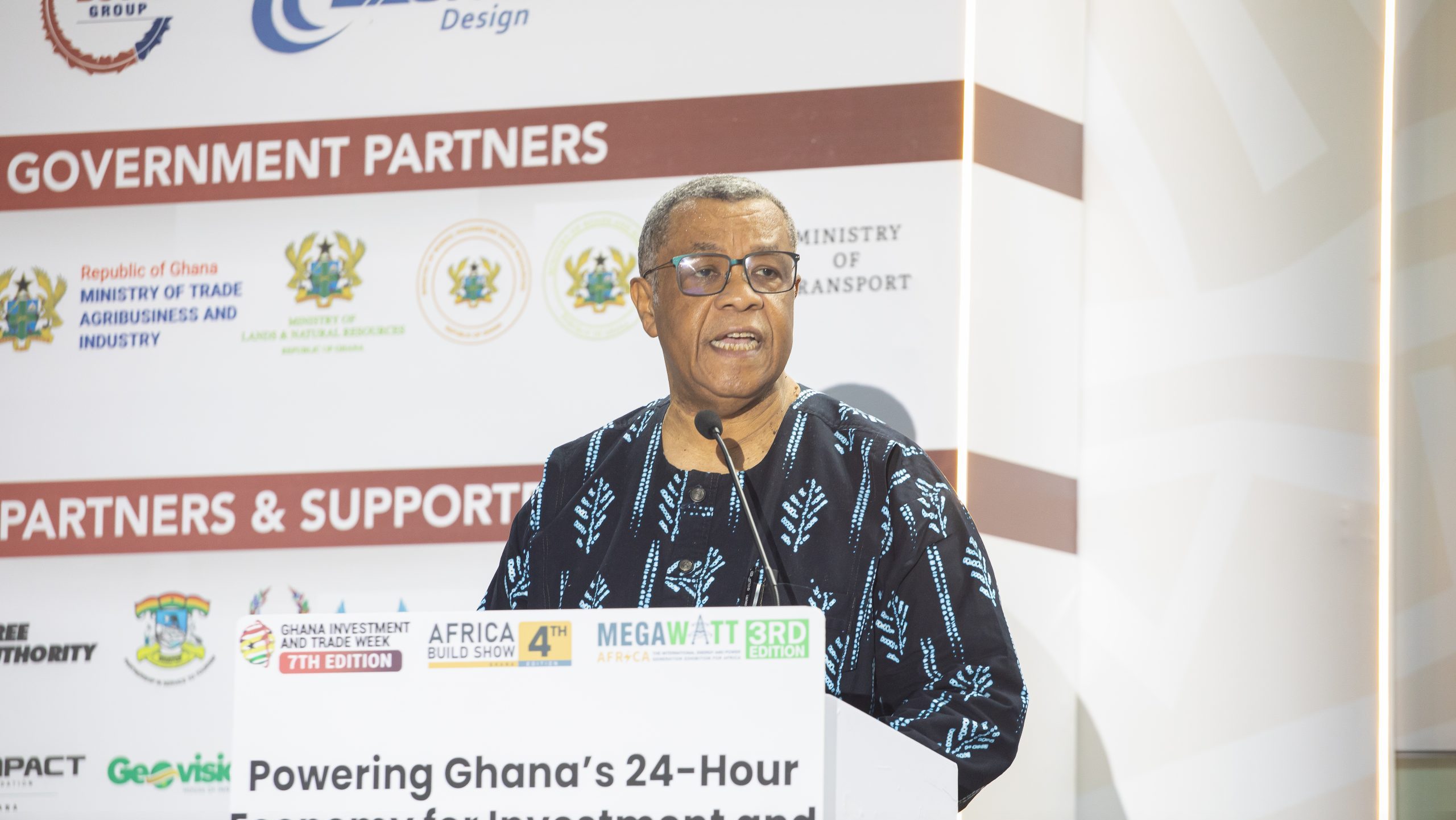
Construction of the first phase of the 1,500-megawatt Buipe Solar Power Project under the Government’s 24-Hour Economy and Accelerated Export Development (24H+) Programme will commence next month. Presidential Adviser on the 24-Hour Economy and Accelerated Export Development, Hon. Augustus Goosie Tanoh, made the announcement at the Ghana Investment and Trade Week (GITW) 2026 in Accra.
The project forms part of Government’s strategy to reduce industrial electricity costs, improve manufacturing competitiveness and position Ghana as a regional production and export hub, Mr. Tanoh said.
The Joint Development Agreement for the Buipe Solar project was signed on April 10 this year, with the project expected to generate up to 1,500 megawatts of solar power backed by battery energy storage to provide reliable electricity for industries, according to Mr. Tanoh.
“The first hundred megawatts begins next month,” he said. The project will reduce electricity costs for industry from the current 18–23 US cents per kilowatt-hour to between seven and nine cents, significantly improving the competitiveness of Ghanaian manufacturers.
Addressing investors, financiers and business leaders, Mr. Tanoh described affordable and sustainable energy as the foundation of Ghana’s industrial transformation, stressing that renewable energy offers the country a long-term competitive advantage over dependence on imported fossil fuels.
A number of strategic projects are currently being developed under the 24H+ Programme, including compressed biogas plants at Buipe and Damanko, the Kambonwule oil palm complex, agro-industrial parks in the Kwahu Afram Plains, the Tamale Air Cargo Hub and the Volta Economic Corridor, which will integrate agriculture, manufacturing, logistics and renewable energy infrastructure.
The Volta Economic Corridor alone could generate about 890,000 jobs, Mr. Tanoh disclosed, contributing to a projected 1.7 million new jobs nationwide by 2028.
Government is deliberately structuring projects to attract private investment by undertaking feasibility studies, securing land, preparing delivery frameworks and aggregating demand before inviting investors to participate, he said.
“The 24-Hour Economy Programme exists to remove the constraints that have held private investment back,” Mr. Tanoh said, adding that the initiative is being implemented in partnership with the Ghana Infrastructure Investment Fund, the Ghana Investment Promotion Centre, the Ghana Free Zones Authority and other sector agencies.
Investment opportunities remain open in renewable energy generation, battery storage, transmission infrastructure, biofuels, waste-to-energy projects, affordable housing, electric mobility and construction materials manufacturing, Mr. Tanoh announced, inviting local and international investors to partner with the Secretariat in delivering the Programme’s transformational projects.
The keynote address was delivered at the Ghana Investment and Trade Week (GITW) 2026 under the theme, “Powering Ghana’s 24-Hour Economy: Integrating Infrastructure, Electric Mobility and Sustainable Real Estate for Investment and Trade Competitiveness.”