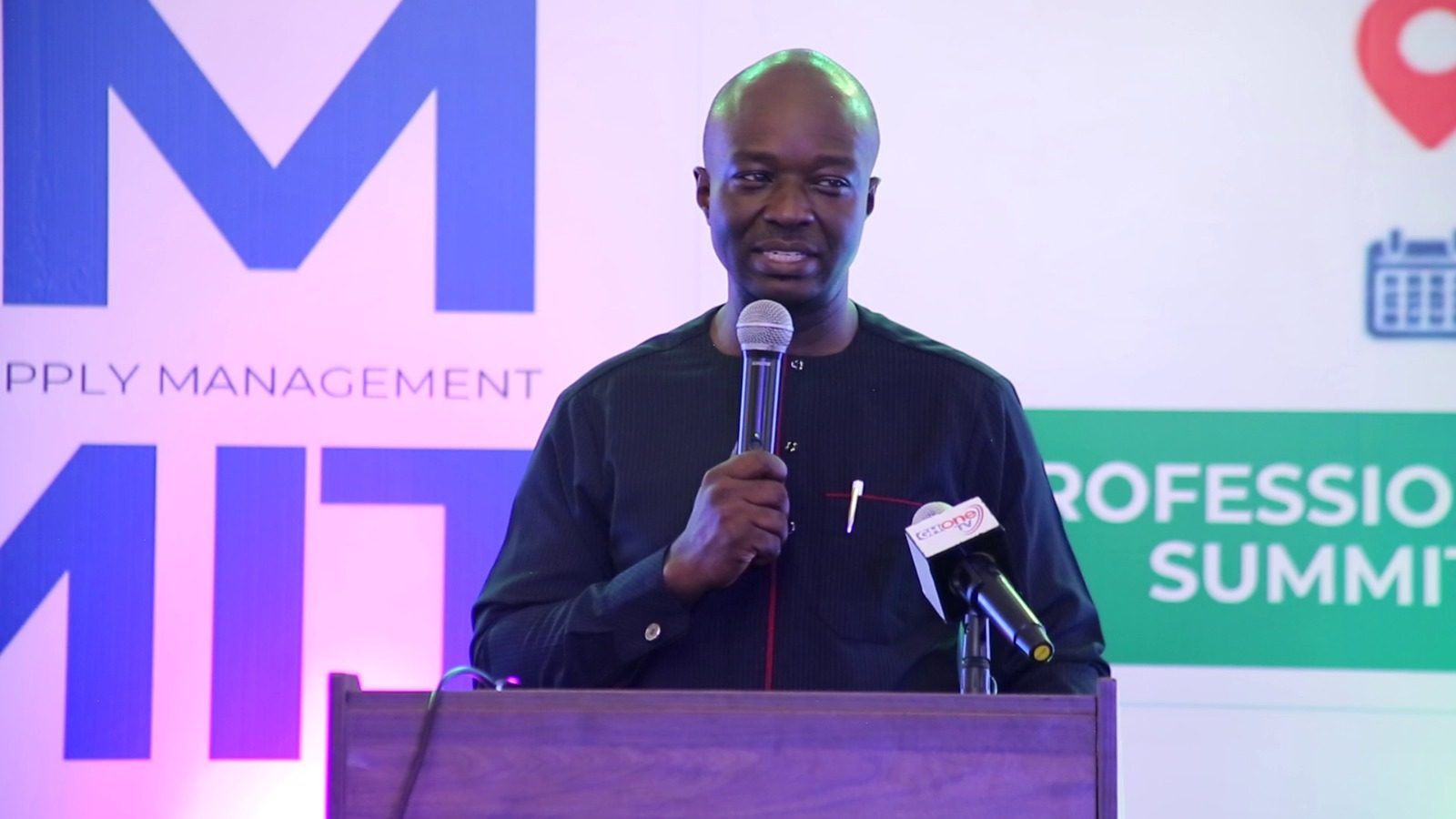
The 24-Hour Economy and Accelerated Export Development Programme will succeed only when Ghana’s resources are organised into connected, productive value chains, the Project Manager for Supply Chain Systems at the 24-Hour Economy Secretariat, Nlaliban Wujangi, has said.
Mr. Wujangi was speaking on behalf of the Presidential Adviser on the 24-Hour Economy and Accelerated Export Development Programme at the International Federation of Procurement and Supply Management (IFPSM) World Summit 2026, held at the Peninsula Beach Resort, Akosombo, Ghana on Tuesday, 13 October 2026.
Addressing the gathering, he said the 24-Hour Economy is not simply about extending business hours, but about creating a coordinated economic system in which energy, skills, finance, production, logistics, regulation, public services and markets remain productive, connected and responsive across day and night.
“The programme seeks to move Ghana from import dependence towards a self-reliant, production-led and globally competitive economy. Its initiatives including agroecological parks, industrial zones, transportation, market systems, aquaculture, tourism and riverine services will succeed when they are developed as complementary parts of a single value-creation system rather than as isolated projects,” he said.
Mr. Nlaliban Wujangi highlighted Lake Volta, covering approximately 8,502 square kilometres, extending about 400 kilometres north-south with an estimated 4,800-kilometre shoreline; emphasising the scale of opportunity.
“By aligning production schedules with transport, storage, border processes and confirmed market demand, the programme will reduce post-harvest losses, manage stock-outs and duplicated inspections, reduce documentation delays and prevent avoidable costs. This translates into a strengthened and integrated local suppy chain system that delivers to the needs of productive sectors, making them resilient by exposing risks and enabling faster responses to disruption,” he added.
Mr. Wujangi concluded by welcoming sustained collaboration with CISCM, IFPSM and the wider professional community, noting that procurement and supply-chain professionals will be indispensable in establishing supplier standards, ethical sourcing frameworks, workforce capabilities, digital systems and performance measures.
“Together, we can build a supply-chain ecosystem that enables the programme and the country at large to operate at scale, compete globally and deliver lasting value to small holder farmers, businesses, communities and the national economy,” he said.