The 24-Hour Economy and Accelerated Export Development Programme (24H+) is on track to create 1.7 million productive jobs by 2028, Presidential Advisor on the programme, Goosie Tanoh, has said.
Speaking at a Ghana Diaspora Townhall Meeting in London as part of the 2026 Ghana-UK Summit, Mr. Tanoh said four agreements signed within the past 90 days alone are expected to generate more than 160,000 jobs, putting the programme firmly on course to meet its employment target.
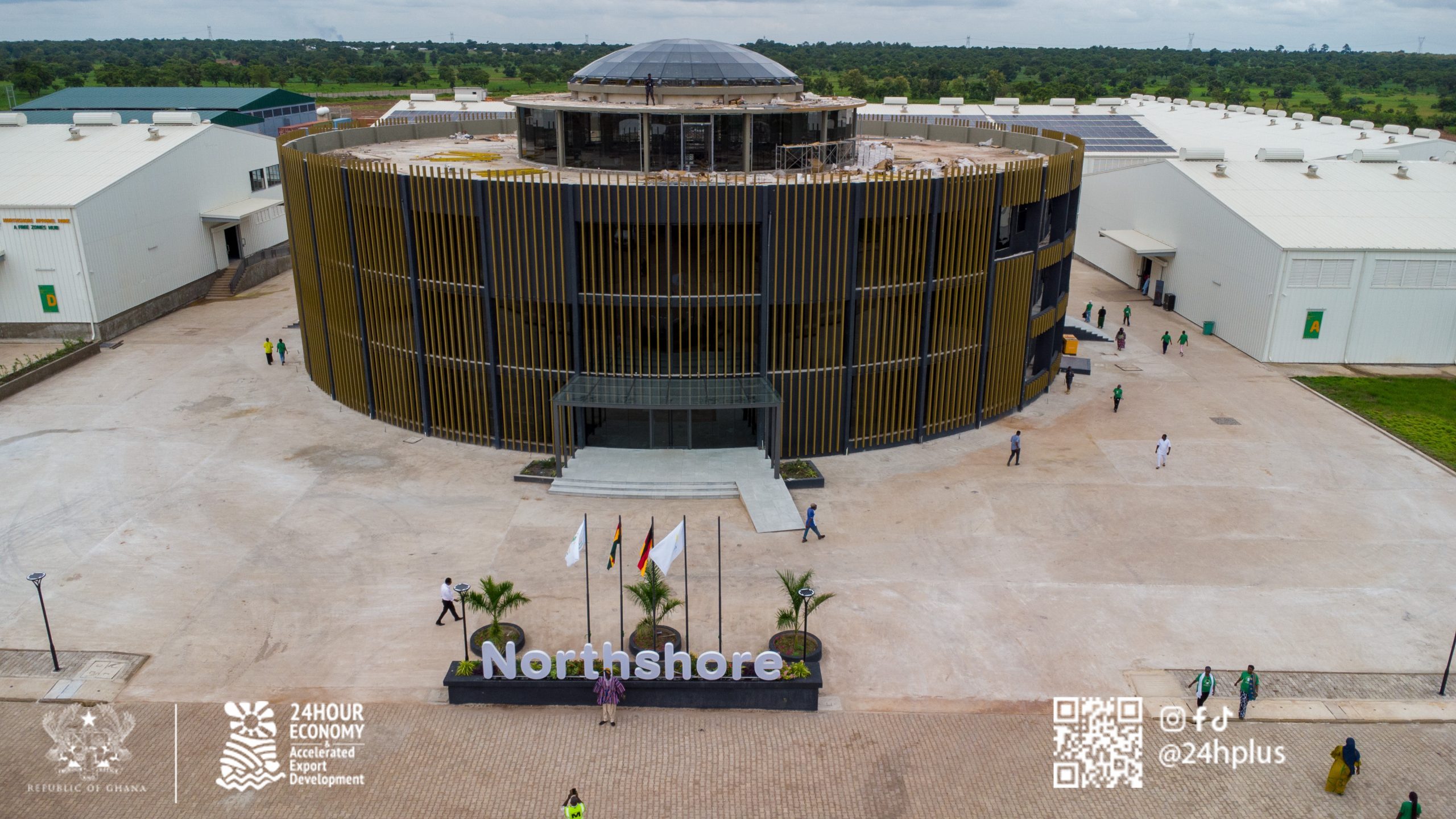
He said the projects include the Buipe Solar Farm, which is projected to create 13,000 jobs; the Kambonwule Oil Palm Project, expected to generate 120,000 jobs; and the Bioenergy and Biofuels Programme at Buipe and Damanko, which will create 30,000 jobs.
According to Mr. Tanoh, the projects are part of the broader 24-Hour Economy strategy aimed at expanding Ghana’s industrial base, reducing imports, and creating sustainable employment opportunities.
He added that other flagship initiatives, including the Volta Lake Transport System, the Singa Agroecological Corridor, the Asutuare Pharmaceutical and Garment Parks, and the National Poultry Programme, are backed by private capital and are moving into implementation.
“These are signed agreements with private capital committed, in motion now,” Mr. Tanoh stated.
He added that the projected figures do not include the thousands of indirect jobs expected to be created across the economy.
Read the full speech below:
Your Excellency Mr President, High Commissioner Madam Sabah Zita Benson, Honourable Ministers, fellow Ghanaians at home and in this great diaspora.
For nearly six decades, our economy has followed the same rhythm. A few good years of growth, a balance-of-payments squeeze, a return to the IMF. Seventeen programmes since 1966, one every three and a half years.
Each restored the books for a time; none touched the underlying structural deformity of the inherited colonial economy. So the cycle resumes.
Since taking office in January 2025, President Mahama has set our country a qualitatively different task that goes to the root causes of this cyclical crisis and ends that rhythm with this generation. The reset he is leading rests on two pillars, and the two must hold together.
The first is disciplined macroeconomic management, and in just seventeen months the indicators have begun to turn in a way Ghanaians have not seen in some time. Inflation is down to 3.4%, the lowest reading in over four years, on fifteen consecutive months of falling inflation. The Bank of Ghana policy rate has been cut from 28% to 14%. The cedi has remained within a ten to twelve cedi-per-dollar band.
International reserves stand at 14.5 billion dollars, close to six months of import cover, with the Bank of Ghana holding nearly 38 tonnes of gold on its balance sheet. The trade surplus in the first two months of 2026 alone reached 3.68 billion dollars. Public debt has fallen from 92.4% of GDP at its peak to around 48%. And the economy grew 6% in 2025. The Finance Minister, the Governor of the Bank of Ghana, and the President’s economic team, under His Excellency’s leadership, have held the line, and they will continue to hold it.
Within that growth lies the very task we have set ourselves. That 6% came largely from services — close to 60% of the growth came from the services sector. Agriculture contributed about 25%.
Industry, the factories and processing plants and construction sites that create productive jobs, contributed even less, around 12%, growing by only 2.3%. That gap is what our second pillar exists to close. And that is the work of the 24-Hour Economy and Accelerated Export Development Programme.
Our strategy moves on two deliberate tracks. The first is export-led. We are building productive capacity where Ghana has latent advantage: agro-processing along the Volta Economic Corridor, which touches seventy-five districts around the Volta Lake and its tributaries; garments and pharmaceuticals; and light industry anchored on affordable energy at Buipe. Non-traditional exports grew more than 30% last year and now make up 16% of total earnings, and we mean to push that share much higher.
The reserves those exports earn fund the machinery, the intermediates, and the technology that the 24H+ Programme requires. We are an open economy and we intend to stay one.
The second track is import substitution, narrowly focused on what we can sensibly make at home. Our food import bill still runs above three billion dollars a year, and we now rank among the world’s largest buyers of frozen poultry offal. Last year alone we spent 2.8 billion cedis on imported animal guts and stomachs — yamu adee, as we call it at home. That is the mark of an undeveloped economy, and we are changing it. Our cassava, oil palm, poultry, construction materials, and pharmaceutical basics can be produced in Ghana, competitively and to world class standards, by Ghanaian enterprise.
And on jobs, which I know is on many minds in this room tonight, the 24H+ pipeline projects one-point-seven million productive jobs by 2028. Four agreements signed in the past ninety days alone already account for over a hundred and sixty thousand of those. Buipe Solar, a 1.45-billion-dollar solar farm in the Savannah Region, will deliver thirteen thousand jobs and the lowest industrial electricity tariff Ghana has ever seen. Kambonwule, our three-hundred-million-dollar oil palm anchor, brings one hundred and twenty thousand jobs and closes our vegetable oil import deficit. The Bioenergy/Biofuels Programme at Buipe and Damanko delivers thirty thousand jobs and saves four hundred and fifty million dollars a year in foreign exchange. And the Tamale Air Cargo Hub has been demarcated for two operators that go live in 2027.
Behind these sit the Volta Lake Transport System, the Singa Agroecological Corridor, the Asutuare pharmaceutical and garment parks, and the National Poultry Programme. These are signed agreements with private capital committed, in motion now. And the job numbers I mentioned do not include the indirect and induced jobs, which will normally run on a multiplier of between 1 and 4.
Which brings me to this room. In 2025, the Ghanaian diaspora sent home a record 7.8 billion dollars in remittances, up from around four billion only six years ago. That flow is now larger than all official development assistance and foreign direct investment combined, and the United Kingdom is our second-largest source after the United States. You have, quietly, been holding up our balance of payments and sustaining millions of households, and we honour that.
We now want to invite you up a step. Look at what diaspora finance has built elsewhere on this continent. Ethiopia mobilised its diaspora through bonds, through embassies, and through the technical advocacy of its professionals abroad to help finance a five-billion-dollar national project without recourse to external concessional loans. The same logic, applied to Ghana’s productive transformation, is what we are putting in front of you tonight. Through the 24H+ pipeline, the GIIF-anchored financing vehicles, and the Securities and Exchange Commission and Ghana Stock Exchange platforms you will hear from this evening, a portion of that flow can find its way into productive Ghanaian enterprise — into the parks, the corridors, and the small and medium-sized businesses that will employ your nieces and your nephews, and give your remittances a multiplier they have never had.
The proposition is straightforward. Stability that is being earned. Transformation that is being built. A country with the structure and the intent for diaspora capital, expertise, and belief to come home.
Your country is ready for you.
Thank you.