The 24-Hour Economy and Accelerated Export Development Secretariat has reaffirmed its commitment to implementing its mandate to expand production and create more employment opportunities for Ghanaians, particularly the youth.
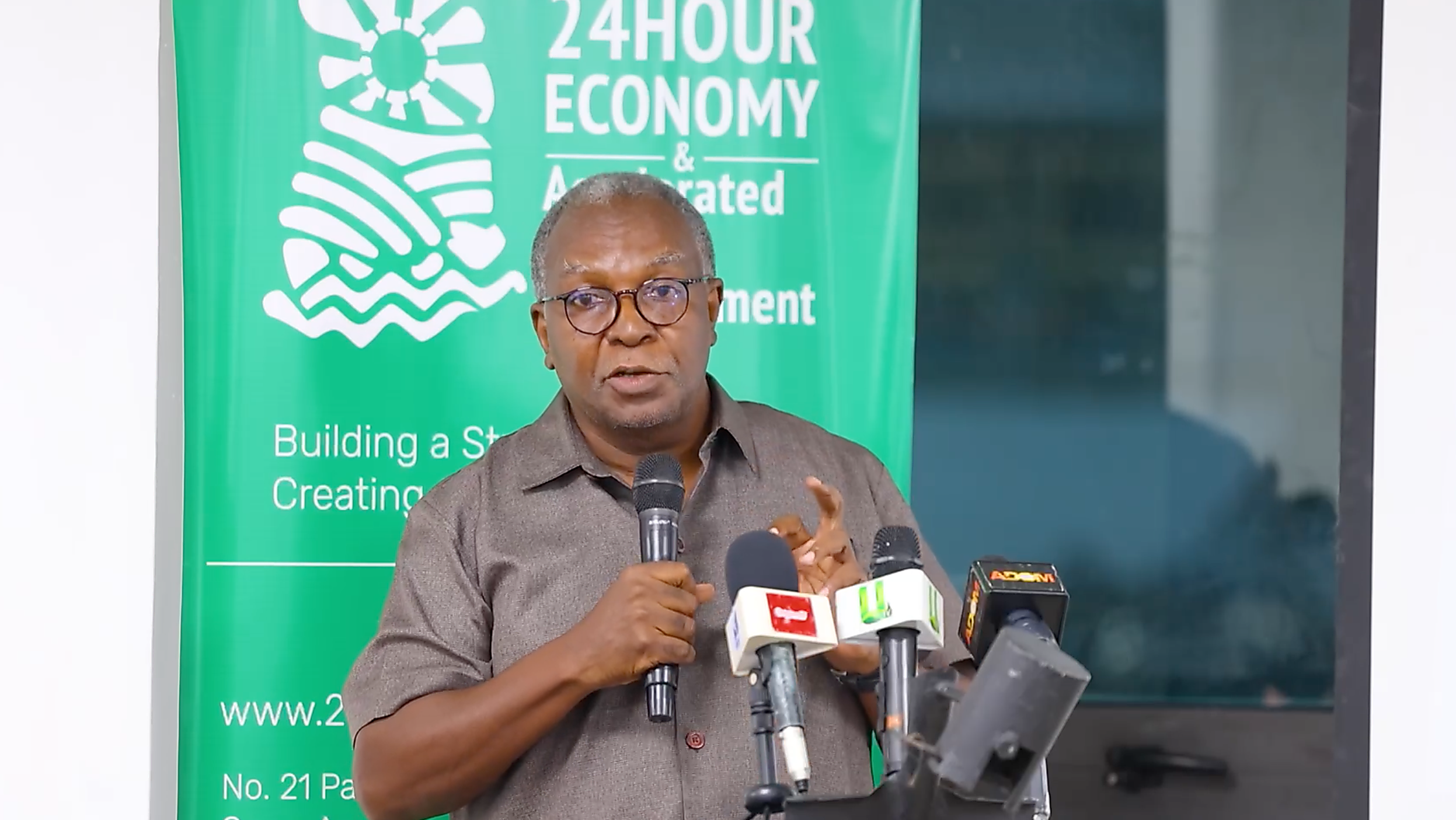
The coordinator of the programme, Mr. Kyeretwie Opoku, said the initiative forms part of a broader strategy to increase production, improve the utilisation of existing industrial capacity and create sustainable jobs.
Speaking at a media engagement at the Secretariat on Wednesday, August 19, 2026, Mr. Opoku said government fully understands the expectations of millions of Ghanaians, especially young people seeking to secure meaningful employment.
“So, if it’s about giving incentives to companies, whether those are tax breaks or something else that allows them to come in and create the employment, of course, operating under regulations that ensure that those investments are socially constructive, we will do it.” he said.
Mr. Opoku however made it clear that sustainable job creation cannot be achieved through consumption and trading alone, but must be anchored on increased production, particularly in agriculture and manufacturing.
He identified the expansion of existing factories as one of the potential quick wins in the Secretariat’s employment agenda.
According to him, some factories currently operating in Ghana are producing at only about 30 percent of their capacity, creating an opportunity to significantly increase output without necessarily establishing entirely new production facilities.
He said the Secretariat is examining what is required to move such facilities from 30 percent production to 60 percent and eventually to full production to create the conditions for factories to operate additional shifts thereby increasing production and generating more employment.
“We have studied the challenges and know what the challenges are. Our job is to find the policy response to that,” he said, adding that the Secretariat is working with relevant ministries and agencies to address the challenges confronting businesses and facilitate expansion.
Mr. Opoku also outlined the Secretariat’s intention to address structural barriers that prevent businesses from expanding and employing more people. These include access to affordable and long-term credit, land acquisition and tenure challenges, investment incentives and policies that can make Ghana a more competitive destination for investment.
“If we have problems with banks feeling unable to provide credit to young people who have good ideas, which will allow them to employ other young people and to move the society forward, our job is to intervene,” he said.
He said the ultimate objective is to mobilise the country around a coherent economic agenda that increases production, retains wealth within Ghana and creates opportunities for the younger generation.
Mr. Opoku called on the media to support the process by helping to communicate the vision and engage the public as the Secretariat works with other government institutions to implement the programme.
“We can’t do this on our own. And we’re going to depend very heavily on all of you,” he said.