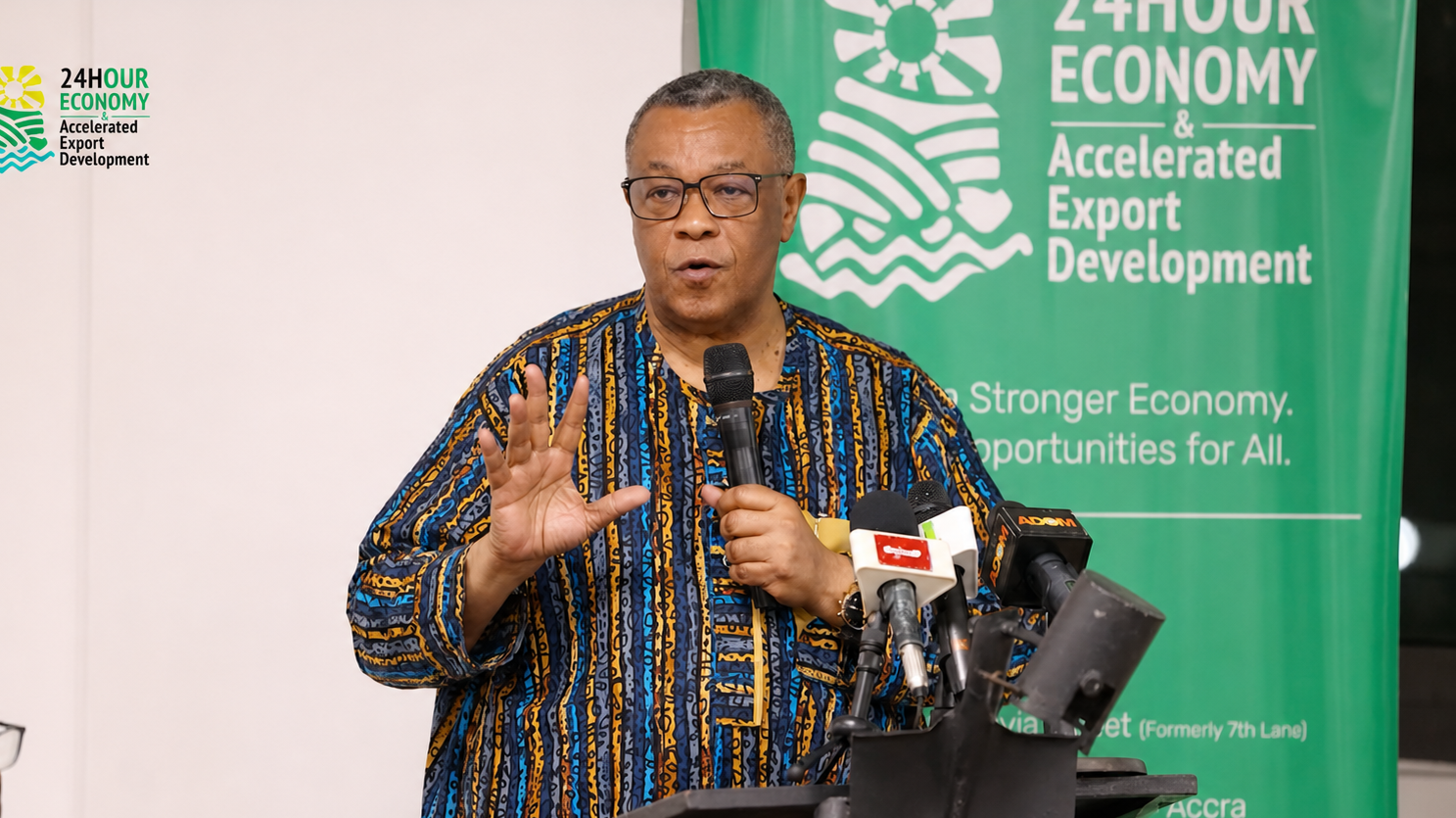
Presidential Advisor on the 24-Hour Economy and Accelerated Export Development Programme (24H+), Goosie Tanoh, has clarified that the rollout of 24-hour markets is the responsibility of the Ministry of Local Government, Chieftaincy and Religious Affairs rather than the 24-Hour Economy Secretariat.
He explained that the 24-hour market system is one of the components associated with the government’s broader 24-Hour Economy agenda and is being financed through the District Assemblies Common Fund (DACF).
He stressed that although the markets carry the 24-hour branding, the 24H+ Secretariat has no jurisdiction over their implementation.
“Although they use the 24-hour logo, we have no jurisdictional control over the markets. We are not part of deciding where it goes, and so on,” Mr Tanoh said.
However, he noted that the successful development of the markets could complement the objectives of the 24H+ programme, particularly by improving efficiency across the agricultural supply chain.
According to him, the provision of modern facilities, including cold-chain infrastructure, would help farmers and traders preserve vegetables and other perishable products and reduce losses along the supply chain.
Mr Tanoh said such infrastructure could help address the significant losses currently recorded within the agricultural supply chain, which he estimated at between 30 and 40 per cent.
He said the Secretariat had been named as a defendant in several lawsuits relating to 24-hour market projects, despite having no jurisdiction over the projects.
Mr Tanoh disclosed that the Secretariat’s lawyers were taking steps to have the secretariat name removed from the defendants’ list in the affected cases.
“Our lawyer is moving a motion in November to get us removed from the defendants’ list, because we have no jurisdiction, we have no status in the matter,” he said.
He reiterated that responsibility for the 24-hour market initiative rests with the Ministry of Local Government and the District Assemblies.