The National Seed System Reset Convening, a two-day high-level policy and technical meeting organised by the 24-Hour Economy Authority in collaboration with the Ministry of Food and Agriculture and key partners, brought together government officials, researchers, private sector actors and development partners to redesign Ghana’s seed system to support agricultural transformation.
The convening, which took place at the West Africa Centre for Crop Improvement (WACCI) at the University of Ghana, is part of broader efforts to strengthen the agricultural production base needed to support the implementation of the 24-Hour Economy agenda.
Addressing participants during a tour of facilities at WACCI, the Presidential Advisor at the 24-Hour Economy Authority, Augustus Goosie Tanoh, emphasised that strengthening Ghana’s national seed system will be critical to building the productive agricultural base required to support agricultural transformation and deliver the government’s 24-Hour Economy agenda.
Mr Tanoh noted that Ghana already possesses the scientific and institutional foundations needed to treat seed development as a critical component of economic infrastructure.
He said, visits to WACCI’s laboratories, early-generation seed facilities, certification laboratories, and the Horticulture Innovation Hub demonstrated that the country has the technical capacity required to strengthen its seed sector.
He explained that the main challenge facing the sector is not the absence of capability, but the need for stronger coordination and effective execution.
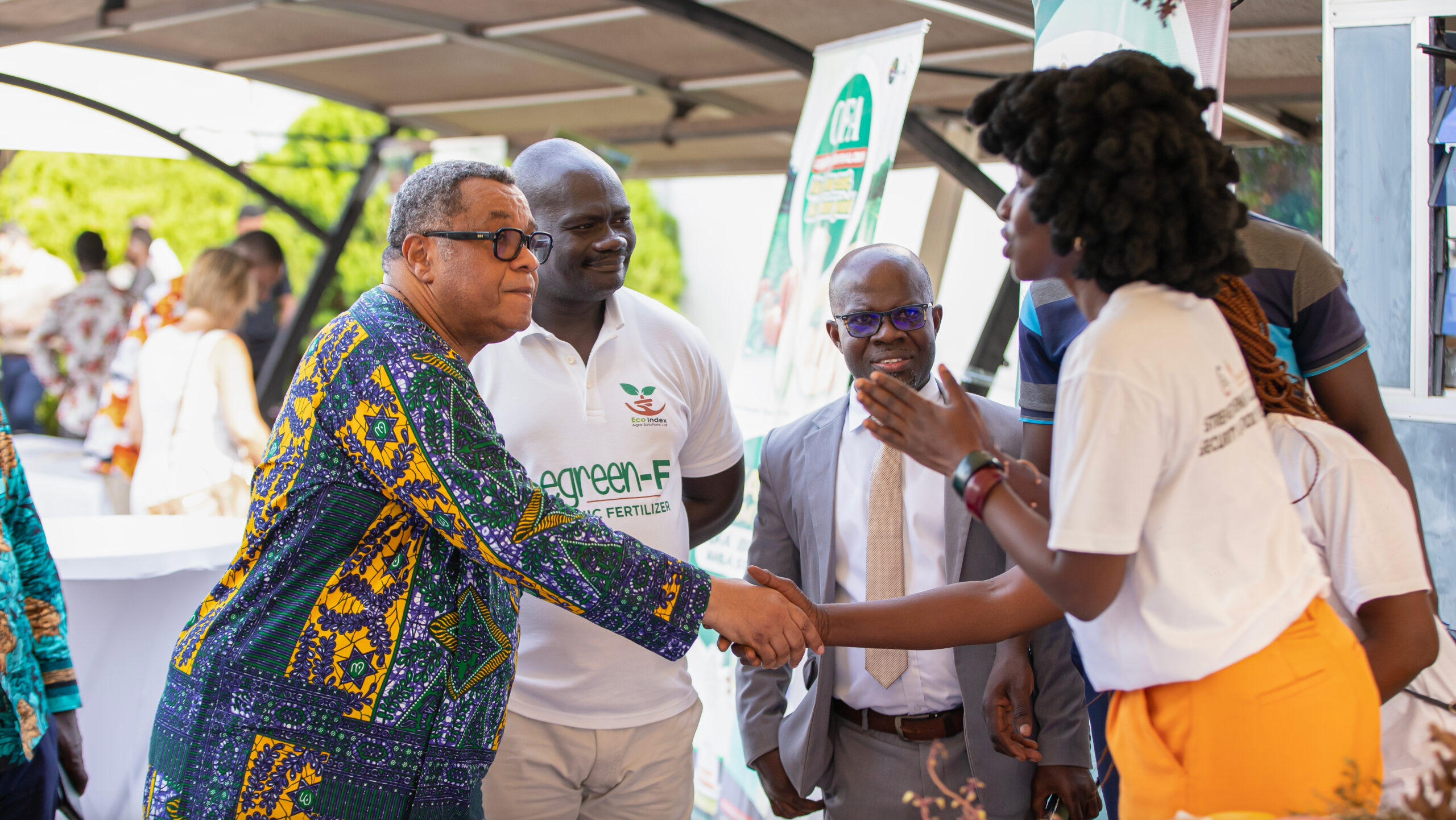
This was further reinforced during an accompanying exhibition, which brought together institutions including the Council for Scientific and Industrial Research (CSIR), the National Seed Trade Association of Ghana (NASTAG), the Ghana Atomic Energy Commission, as well as private sector partners and development agencies. This highlighted the breadth of expertise already available across the sector.
However, Mr Tanoh stressed that Ghana must now organise these capabilities into a coherent national seed delivery architecture capable of supporting the country’s broader economic transformation agenda.
From Planning to Execution
Mr Tanoh indicated that as Ghana moves further into 2026, the 24-Hour Economy initiative, also known as 24H+ is transitioning from policy design to implementation.
“Our programme will be judged by concrete outcomes. We want to be assessed by jobs created, SMEs financed, parks and corridors that are producing, capital that is committed and deployed, and systems that can outlive political cycles,” he said.
He outlined key targets for the year, including creating 200,000 jobs, bringing 500 small and medium-sized enterprises into structured financing and park ecosystems, and mobilising more than GH¢10 billion in capital commitments.
In addition, the government aims to operationalise the Volta Economic Corridor, establish at least five agroecological or aquaculture parks, activate three industrial parks, and support three cooperative-owned production and processing enterprises.
Mr Tanoh emphasised that achieving these targets will require a reliable supply of high-quality seeds to support agricultural production across the country.
Strengthening Ghana’s Seed System
Mr Tanoh explained that strengthening the national seed delivery system will play an important role in supporting flagship agricultural initiatives such as GROW24 agroecological parks and the government’s Feed Ghana Programme.
“When we talk about activating parks, corridors, export platforms and cooperative enterprises, we are essentially talking about reliable access to quality seed,” he said.
According to him, an effective seed system must combine improved seed varieties with stable demand, financing, logistics and strong research support.
“If government can help de-risk the system and guarantee demand, while private and cooperative actors provide quality seed at scale and research institutions secure the pipeline of new varieties, then many of our 2026 targets become easier to achieve,” he added.
Protecting Innovation in the Seed Sector
Mr Tanoh also highlighted the importance of strengthening intellectual property protection within Ghana’s seed sector.
He explained that breeders, research institutions and private seed companies must be assured that their investments in developing new varieties will be protected through clear rules governing plant breeders’ rights, licensing agreements and technology transfer.
The aim, he said, is to ensure affordable access to quality seeds for farmers while also encouraging innovation and discouraging counterfeiting.
“If we get this balance right, Ghana can build an innovation-driven seed system similar to those in leading agricultural economies while adapting it to our local realities,” he said.
Towards an Implementation Roadmap
Mr Tanoh indicated that discussions at the convening were expected to produce practical decisions on how the seed sector should be organised to support Ghana’s economic transformation agenda.
Over the course of the two-day engagement, participants successfully agreed on key architectural principles for the seed system, developed crop-specific delivery models, and established a Seed Systems Task Team mandated to produce a detailed implementation roadmap within 60 days.
Within 90 days, stakeholders expect early-generation seed plans to be finalised, regulatory reforms initiated and pilot seed delivery models for maize and rice aligned with national programmes.
Collaboration Across Institutions
Mr Tanoh expressed appreciation to key institutions and partners contributing to the initiative, including the Ministry of Food and Agriculture, WACCI, CSIR, NASTAG, and the Ghana–Netherlands Seed Partnership.
He also acknowledged the support of development partners such as the Foreign, Commonwealth & Development Office (FCDO) and the Embassy of the Kingdom of the Netherlands in Ghana.
According to him, the strong collaboration among government agencies, research institutions, private sector actors and development partners demonstrates that Ghana is well positioned to build a modern and resilient seed system.
“Ghana is not starting from zero. We are starting from a position of strength that now needs to be organised into a coherent national seed delivery system,” he said.
He urged stakeholders to move beyond identifying challenges and focus on implementing practical solutions that will enable Ghana’s agricultural sector to support the broader 24-Hour Economy agenda.
“The work we do here will determine whether Ghana can activate jobs, mobilise capital and unlock the productive potential of our agricultural corridors,” he said.