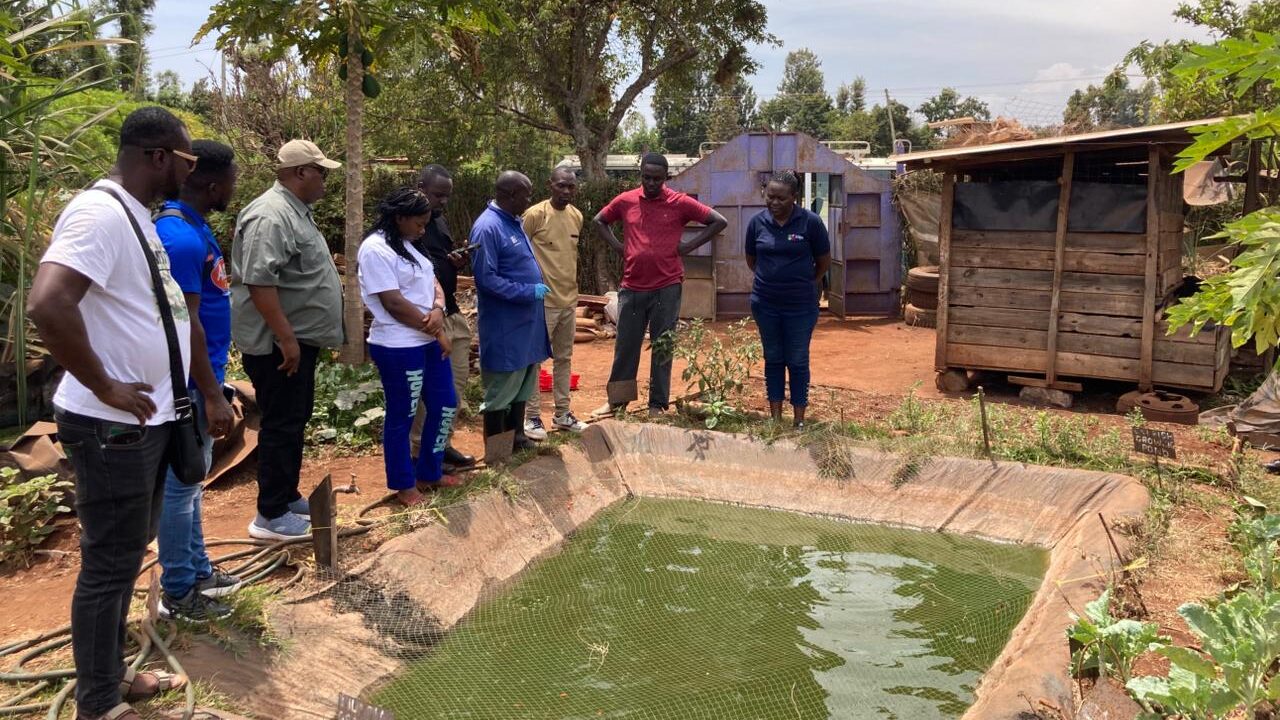
A seven-member delegation led by GROW24, a sub-programme under Ghana’s flagship 24-Hour Economy and Accelerated Export Development Programme is in Kenya to explore innovative and cost-effective solutions to reduce animal feed costs and strengthen Ghana’s agribusiness value chain.
The mission comes at a critical time for Ghana’s poultry and aquaculture sectors, where feed cost remains the largest single production expense, accounting for about 65–70 percent of total production costs.
The cost structure continues to limit productivity, competitiveness, and expansion across the value chain, making sustainable and affordable feed solutions a national priority under the 24-Hour Economy agenda.
The GROW24 team is participating in a Black Soldier Fly (BSF) training programme funded by the Australian Centre for International Agricultural Research (ACIAR). The programme provides exposure to proven, commercial-scale BSF production systems that convert organic waste into high-protein animal feed and nutrient-rich organic fertilizer. These systems have demonstrated strong potential to significantly lower feed costs by 40% while promoting environmental sustainability.
The delegation comprises experts from the Ministry of Fisheries and Aquaculture, specialists in waste management, poultry and fish feed production professionals, fertilizer experts, and a private sector entrepreneur.
The multidisciplinary approach is designed to ensure that lessons learned from Kenya are technically sound, policy-aligned, and commercially viable when adapted to Ghana’s context under the broader 24-Hour Economy framework.
Kenya was selected due to its leadership in commercial BSF production, with established enterprises producing large volumes of insect-based protein for poultry and fish feed while creating jobs and supporting circular economy models. The Kenya success stories offer practical insights into how Ghana can address its feed cost challenge while unlocking new agribusiness opportunities.
During the engagement, the GROW24 led team would be working closely with leading BSF producers and research institutions, including the International Centre of Insect Physiology and Ecology (icipe). Key focus areas include production system design, processing and quality standards, supply chain logistics, business models, and regulatory pathways required to scale BSF production sustainably.
Expected outcomes from the visit include adapted production guidelines for Ghana, identification of strategic partners, and a clear roadmap for establishing commercial BSF facilities.
Over time, the initiative is expected to contribute to lower feed costs for poultry and fish farmers, encourage private sector investment, create jobs, and supply organic fertilizer to GROW24 agroecological parks.