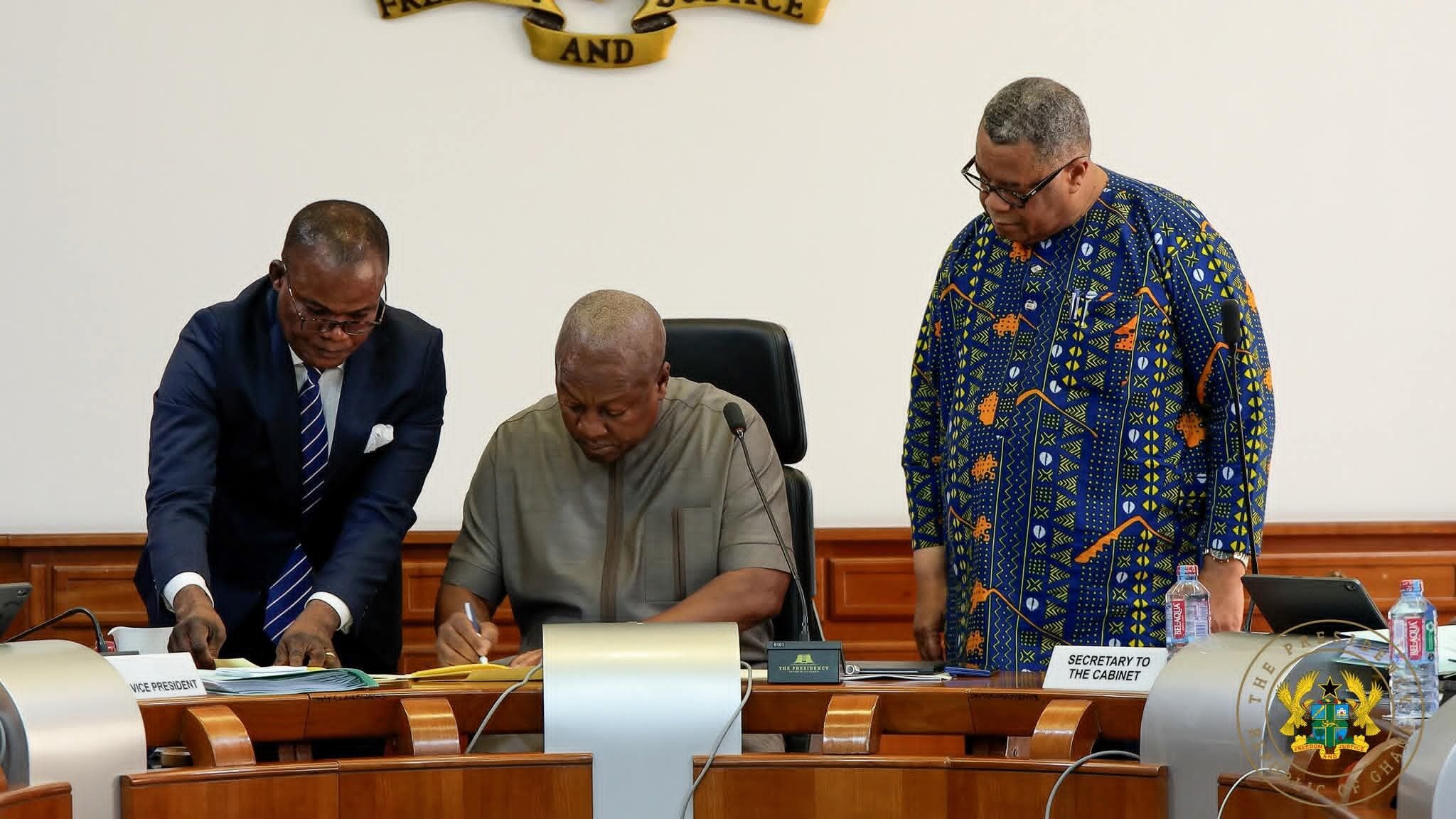
The President H.E. John Dramani Mahama, on Wednesday, February 19 2026 officially assented to the 24-Hour Economy Authority Bill at a signing ceremony held at the Presidency, marking a significant milestone in Ghana’s efforts to strengthen productivity, industrial coordination, and sustained economic growth.
The signing formalizes the establishment of the 24-Hour Economy Authority, mandated to coordinate policies, infrastructure readiness, and institutional collaboration required to enable continuous production and service delivery across priority sectors where economically viable.
In his remarks after the signing, President Mahama underscored the strategic importance of the legislation to Ghana’s economic future.
“I just appended my signature to give assent to the 24-hour Authority Bill. This Bill, which Ghanaians have been waiting for, is one of our flagship strategies for economic transformation.”
The President further explained that the legislative process required careful due diligence to ensure the policy is supported by a robust legal framework capable of driving sustainable implementation. He further emphasized the importance of creating an enabling environment that attracts investment, expands productivity, and generates employment opportunities, particularly for young people.
“Now we must move from strategy to implementation. The business sector is waiting, Ghanaian investors are waiting, foreign investors are waiting. They want to see the package of incentives that we can afford, so that they can invest more and expand productivity and also create more employment for our young people, and so it’s my pleasure to assent to this Bill today.”
The establishment of the 24-Hour Economy Authority signals government’s commitment to strengthening coordination across energy, transport, logistics, labour, and regulatory systems to enable businesses and industries to operate more efficiently where extended operations are economically viable.
The Authority will coordinate implementation across ministries, agencies, local governments, and private sector stakeholders to unlock Ghana’s productive potential, enhance competitiveness, and support inclusive economic growth.