The Government of Ghana, through the 24-Hour Economy and Accelerated Export Development
Secretariat, has taken a major step toward unlocking the economic potential of the Volta Lake as part of efforts to transform the country into a hub for agriculture, renewable energy and industrial growth.
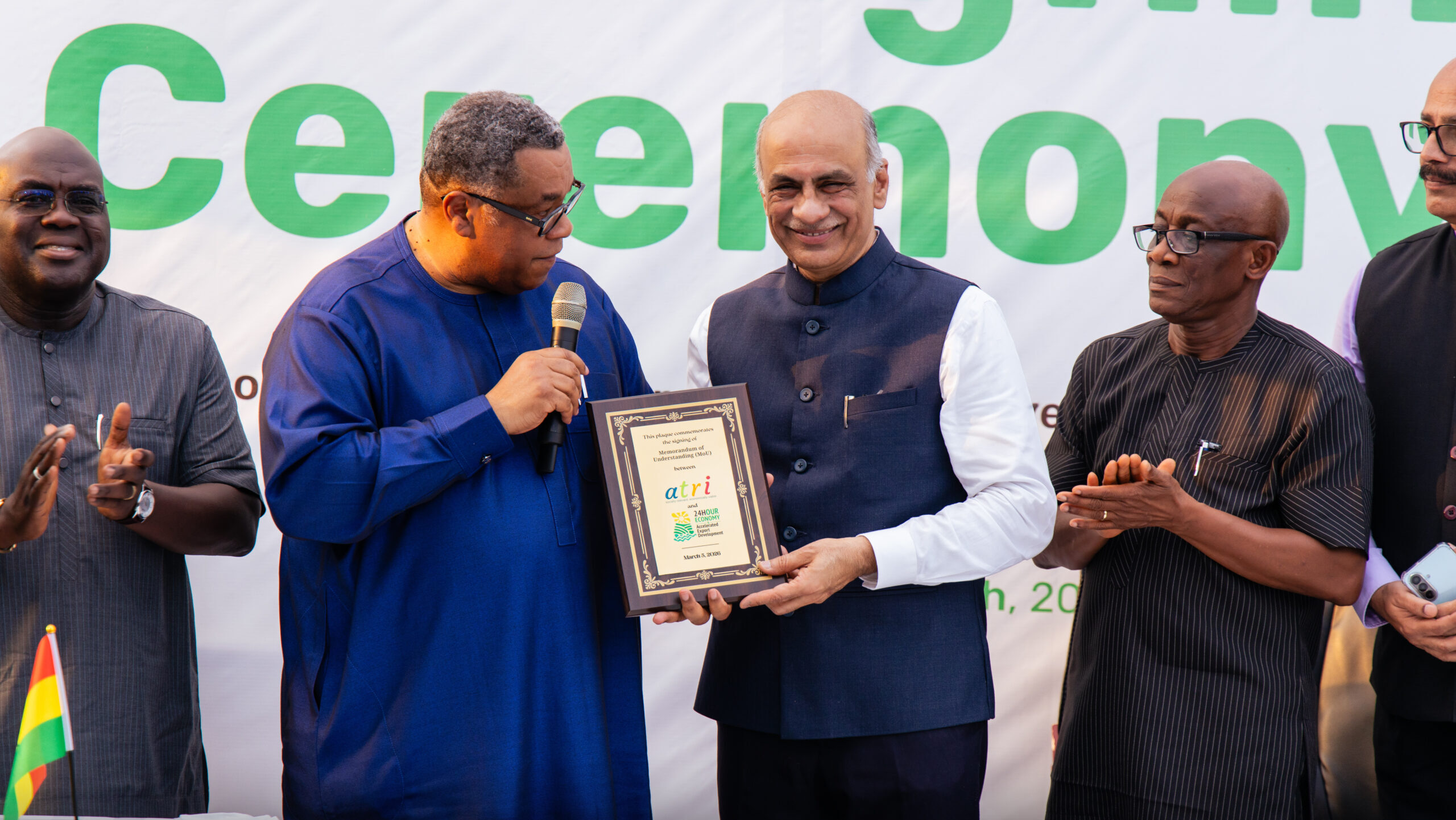
The initiative follows the signing of a Memorandum of Understanding (MoU) between the Government of Ghana, through the 24-Hour Economy and Accelerated Export Development Secretariat, and international clean energy and infrastructure development company ATRI Energy Transitions Private Limited.
The partnership will focus on the development of the Volta Economic Corridor, a long-term national initiative designed to unlock the agricultural, energy and logistics potential of the Volta Basin and position Northern Ghana as a major centre for production and export.
The initiative is expected to stimulate large-scale investment, boost agricultural productivity and create thousands of jobs across the Northern, Savannah and Oti Regions.
Speaking at the signing ceremony, Chief of Staff Julius Debrah described the partnership as a significant step toward expanding economic opportunities across the country.
“Our goal is to unlock the immense potential of northern Ghana and transform it into a vibrant production hub that supports agricultural growth, industrial development and export expansion,” he said.
Transforming the Volta Economic Corridor
At the centre of the initiative is the Volta Economic Corridor, a flagship national project aimed at harnessing the agricultural resources, renewable energy potential and strategic transport routes of the Volta Basin.
Under the collaboration, several large-scale projects will be explored to support agricultural production and industrial growth across the Northern, Savannah and Oti Regions.
These include the establishment of agro-ecological parks in the Northern, Savannah and Oti Regions to support the large-scale cultivation of oil palm, cassava, fruits, vegetables and Napier grass.
The partnership also envisages the development of modern cargo and cold chain logistics infrastructure linked to Tamale Airport, which will help improve storage, transportation and export of agricultural produce to international markets.
In the energy sector, the collaboration will explore major renewable energy investments including a proposed 1.5-gigawatt solar power project, battery energy storage systems and compressed biogas facilities aimed at strengthening Ghana’s energy capacity while supporting the country’s transition toward cleaner energy sources.
Additional initiatives under consideration include improvements in transport and mobility systems, including electric and hybrid bus retrofits, rail transport corridors and other innovative transit solutions to enhance connectivity across the region.
Together, these initiatives are expected to strengthen energy security, increase agricultural output and stimulate industrial development across the northern corridor.
Strengthening Ghana–India Economic Cooperation
Presidential Advisor on the 24-Hour Economy Programme, Augustus Goosie Tanoh, said the
partnership also reflects the growing economic cooperation between Ghana and
India.
“This Memorandum of Understanding represents our shared commitment to developing renewable
energy and agricultural systems that can drive inclusive growth within the
Volta Economic Corridor and beyond,” he said.
According to the Secretariat, ATRI Energy is currently preparing long-term investment plans that could reach up to US$10 billion by 2031, signalling strong investor
confidence in Ghana’s development agenda.
Private Sector Commitment to Sustainable Development
Chairman of ATRI Energy Transitions Private Limited, S. Kishore, expressed confidence in Ghana’s development vision and the opportunities presented by the 24-Hour Economy programme.
He noted that ATRI’s approach focuses on combining clean and green energy technologies with modern infrastructure solutions to support long-term economic development.
Professor Kishore also emphasised the company’s commitment to working closely with Ghanaian institutions, research organisations and local communities to develop scalable solutions aligned with Ghana’s development priorities.
Catalysing Investment and Job Creation
The 24-Hour Economy Secretariat indicated that the MoU will provide a framework for further project development, including feasibility studies and the signing of additional agreements to move selected projects toward implementation.
Government will support the process by facilitating regulatory approvals, enabling land access through its Participatory Land Access Model (PLAM), and coordinating with relevant institutions to ensure efficient project delivery.
Officials say the initiative aligns with the broader objective of the 24-Hour Economy programme to build a productive, export-driven economy that creates opportunities for Ghanaians while strengthening national resilience.
The signing ceremony was attended by Seth Terkper, Presidential Adviser on the Economy; H.E. V. N. Parameswaran, High Commissioner of India to Ghana; representatives of partner financial institutions; officials from Ghana’s energy sector; members of the 24-Hour Economy Secretariat; and executives of ATRI Energy Transitions Private Limited.